

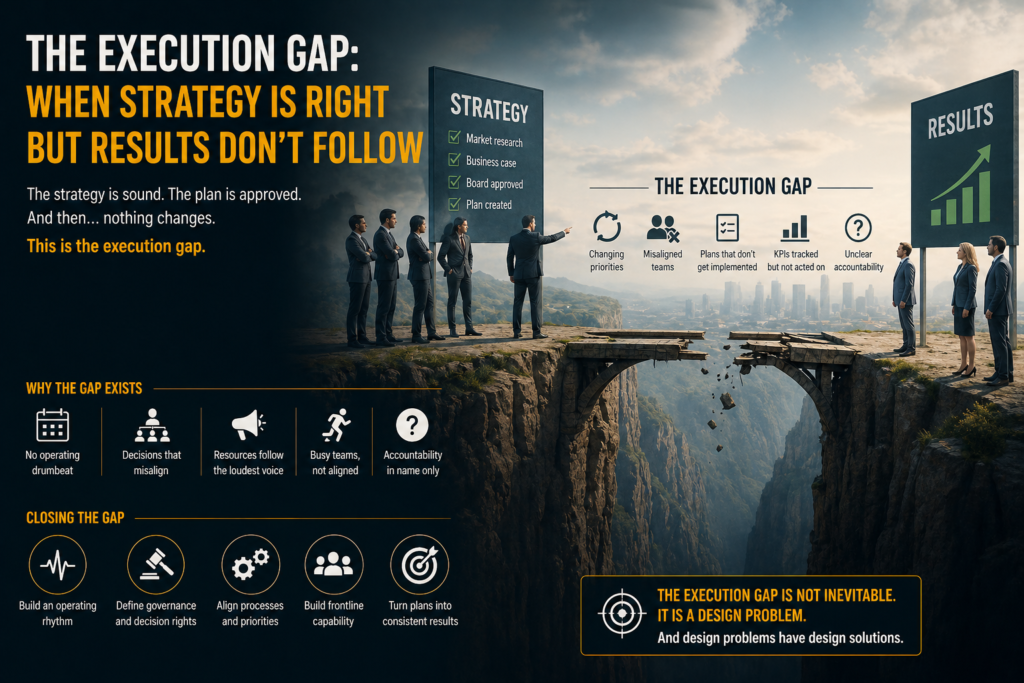
Every leadership team has had the experience. The strategy is sound. The market research was thorough. The business case was compelling. The board approved it. And then, six months later, nothing has changed. The plan is sitting in a shared drive, half-implemented, overtaken by the daily reality of running the business.
This is the execution gap — and it is the single most common reason growth strategies fail.
Strategy is easy. Execution is the hard part.
The uncomfortable truth is that most businesses do not fail because their strategy was wrong. They fail because they could not execute it. The gap between “what we decided to do” and “what actually happens on the ground” is enormous in most organisations, and it is almost always underestimated.
The execution gap shows up in predictable ways. Priorities that change every quarter. Initiatives that launch but never land. Teams that are busy but not aligned. Meetings that generate decisions but not actions. KPIs that are tracked but never acted on.
And the most telling symptom of all: when you ask five members of the leadership team what the top three priorities are, you get five different answers.
Why the gap exists
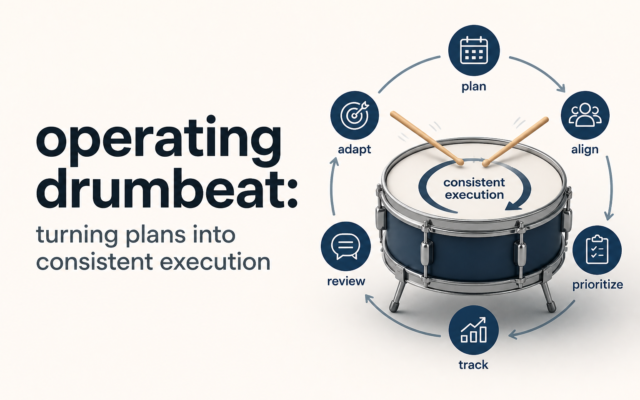
The root cause is almost never effort. People are working hard. The problem is structural. Most businesses lack what we call an operating drumbeat — a systematic cadence of planning, reviewing, adjusting, and escalating that connects the annual strategy to the weekly actions of every team.
Without this drumbeat, strategy lives in the boardroom and operations lives on the frontline, and nobody builds the bridge between them. Managers make local decisions that feel right in context but misalign with the larger plan. Resources drift toward the loudest voice rather than the highest priority. And accountability becomes a word people use in meetings but nobody experiences in practice.
Closing the gap
Closing the execution gap is not about working harder or hiring more people. It is about building the systems that make consistent execution possible: a clear operating rhythm, defined governance, decision rights that match the pace of the business, and frontline capability that enables people to execute — not just follow instructions.
This is the focus of Execution Excellence within the Nuraya Growth System. We do not write strategy decks and leave. We build the operating systems that make strategy stick — the drumbeat, the governance, the processes, and the frontline capability that turn good plans into consistent results.
The execution gap is not inevitable. It is a design problem. And design problems have design solutions.
Share