
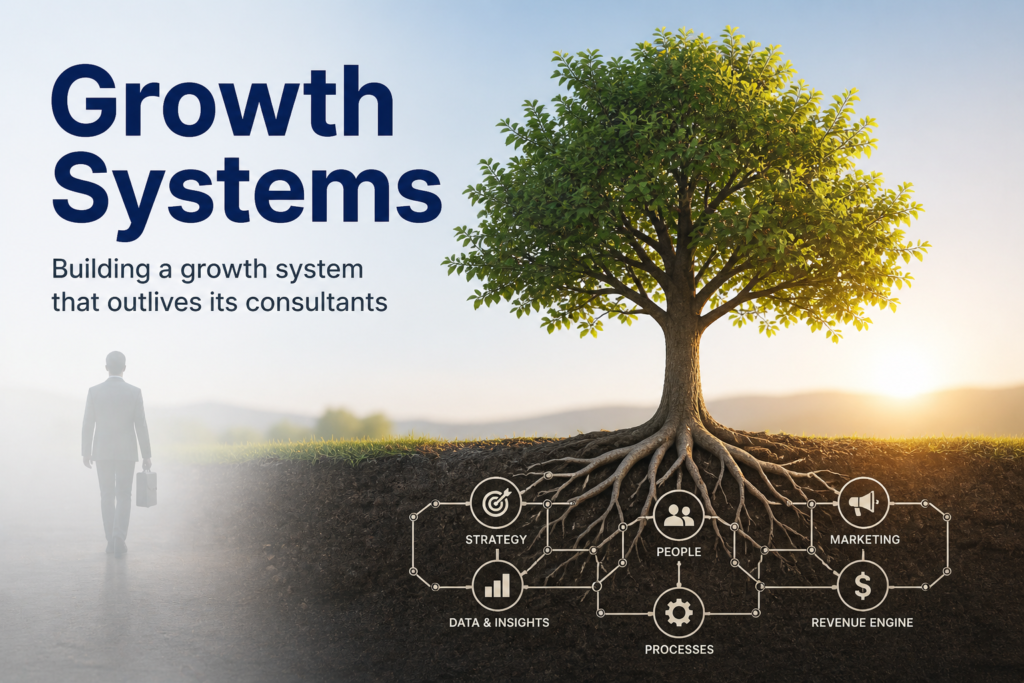
The measure of a good consulting engagement is not what happens while the consultants are in the room. It is what happens after they leave. If the results depend on the consultants being present, the engagement has failed — regardless of how impressive the interim outcomes looked.
This is a principle we take seriously at Nuraya, and it shapes everything about how we work: the systems we build, the capabilities we develop, and the way we structure our partnerships.
The dependency problem
Traditional consulting creates a dependency by design. The consultants bring analytical horsepower, frameworks, and senior attention. They produce recommendations. The client implements some of them. Results improve while the consultants are engaged. Then the engagement ends, the consultants move to their next client, and the results gradually fade.
This pattern is so common that many businesses have stopped expecting anything different. They budget for recurring consulting engagements the way they budget for office supplies — a permanent line item, not a one-time investment.
The dependency exists because most consulting engagements transfer knowledge without transferring capability. They produce answers without building the muscles the client needs to find answers independently. They optimise the system without teaching the client how to maintain and evolve the system.
What a lasting system looks like
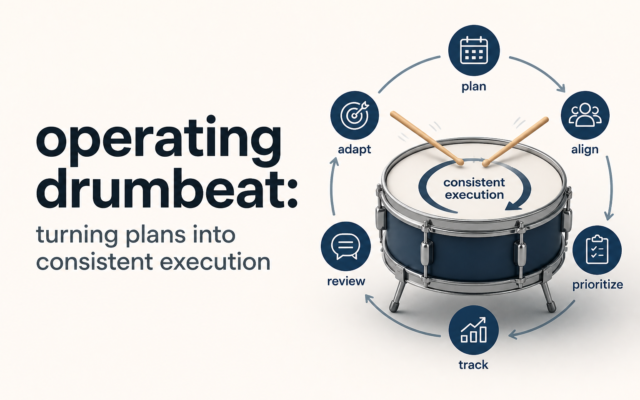
A growth system that outlives its consultants has four characteristics. First, it is embedded in process, not in people. The operating drumbeat, the pricing governance, the performance reviews — these are systematic, documented, and repeatable. They do not depend on any individual, whether an internal champion or an external advisor.
Second, it builds capability, not just results. Every engagement should leave the client team more capable than it found them. This means working alongside client teams, not instead of them. It means teaching the analytical methods, not just presenting the conclusions. It means building internal champions who own the system after the engagement ends.
Third, it has governance. A system without governance decays. There must be clear ownership, regular review cadence, and explicit accountability for maintaining the system over time. Governance is the difference between a system that runs for a quarter and one that runs for a decade.
Fourth, it is adaptive. Markets change. Customers change. Competitors change. A rigid system becomes irrelevant. A lasting system has built-in mechanisms for sensing change and adjusting — feedback loops, market monitoring, and regular strategic refresh cycles.
How we build for endurance
This principle shapes the Nuraya Growth System at every level. Our four partnership phases — Understand, Design, Build, Sustain — are designed to transfer ownership progressively. In the Understand phase, we lead the analysis. In Design, we co-create with the client team. In Build, the client team leads and we support. In Sustain, we step back to an advisory role and eventually step away entirely.
The goal is not to make ourselves indispensable. The goal is to make ourselves unnecessary. When a client’s growth system is running without us — when the drumbeat is habitual, the governance is maintained, the capabilities are embedded, and the results are self-sustaining — that is the outcome we measure ourselves by.
If you need your consultants to stay forever, you hired the wrong consultants.
Share