

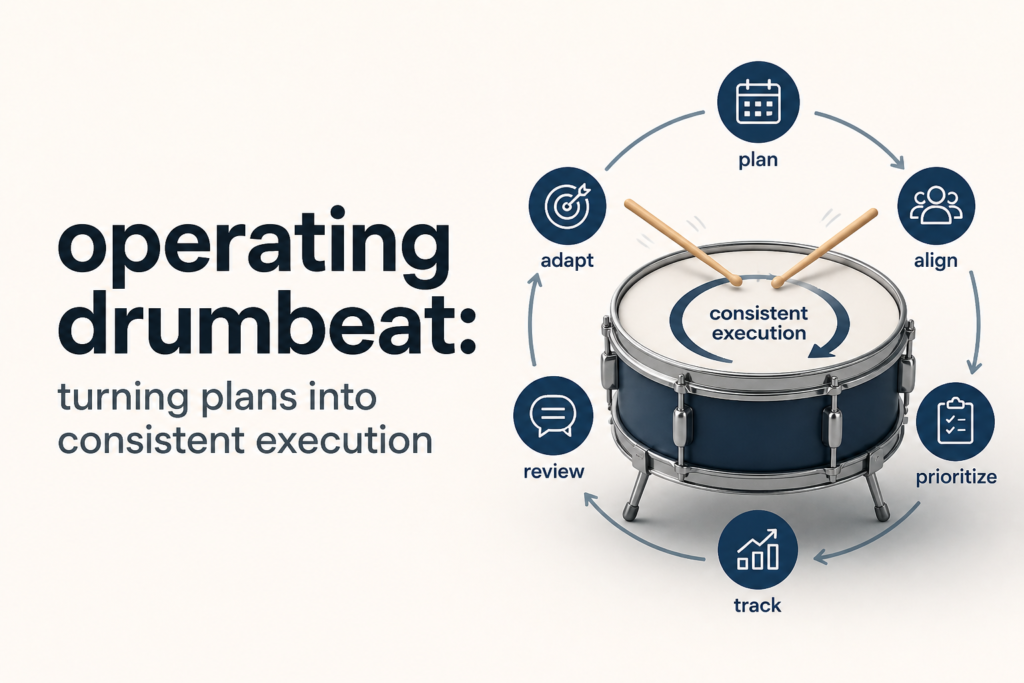
Consistent execution is not about talent, motivation, or effort. It is about rhythm. The businesses that execute consistently — that turn plans into results quarter after quarter — do so because they have built a systematic cadence of planning, reviewing, adjusting, and escalating. We call this the operating drumbeat.
What an operating drumbeat looks like
The drumbeat is a structured rhythm that connects the annual strategy to the daily actions of every team. It operates at multiple frequencies: annual strategic planning, quarterly business reviews, monthly performance reviews, weekly team check-ins, and daily operational huddles.
Each frequency serves a different purpose. The annual cycle sets direction and allocates resources. The quarterly review checks trajectory and adjusts priorities. The monthly review measures progress and identifies gaps. The weekly check-in ensures alignment and removes blockers. The daily huddle catches problems before they compound.
The power is not in any single meeting. It is in the cadence — the reliable, predictable rhythm that ensures no plan sits untouched for more than a week, no problem festers for more than a day, and no priority drifts without someone noticing.
Why most businesses lack one
Most businesses have meetings. Many even have regular reviews. But few have a genuine operating drumbeat — a system where the outputs of one level feed directly into the inputs of the next, where accountability is structural rather than personal, and where the cadence is maintained with the same discipline as financial reporting.
The reasons are predictable. The annual strategy is set in an offsite and then filed away. Quarterly reviews are retrospective rather than forward-looking. Monthly performance data arrives too late to act on. Weekly meetings become status updates rather than decision forums. And daily huddles feel like micromanagement.
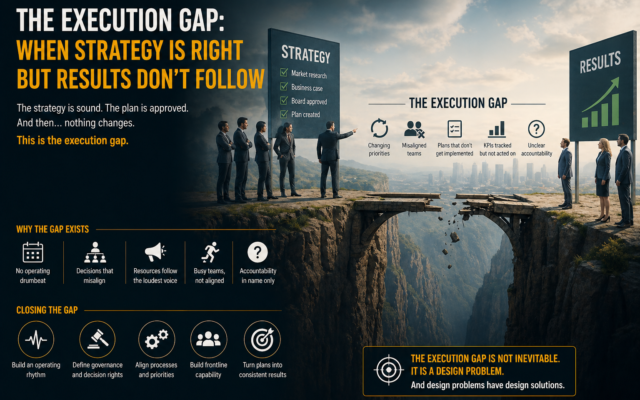
The result is the execution gap. Strategy lives at the top. Operations live at the bottom. And the middle of the organisation — where strategy should be translated into action — is a free-for-all of competing priorities, informal escalation, and heroic individual effort.
Building the drumbeat
Building an operating drumbeat is one of the most impactful things a business can do. It does not require new technology or additional headcount. It requires clarity about what is reviewed at each frequency, who is accountable for each metric, what decisions can be made at each level, and how escalation works when targets are missed.
This is the core of Execution Excellence within the Nuraya Growth System. We design the drumbeat, build the governance, establish the KPIs and decision rights, and — critically — work alongside teams for long enough that the rhythm becomes habitual rather than imposed.
Consistent execution is not a character trait. It is a design outcome. And the operating drumbeat is how you design it.
Share